Your toddler falls and scrapes a knee. Both parents are standing right there, but only one name gets yelled. Or a school form asks you to name the “primary parent,” and you both pause with the pen. If you’ve wondered what primary parent means, you’ve probably noticed the phrase gets used in two very different ways.
At home, it usually means the parent who carries most of the day-to-day care and planning. In family law, it describes where a child mostly lives after parents separate. This post explains both, plus what to do if the role feels lopsided in your house.
What Does Primary Parent Mean at Home?
In everyday family life, the primary parent is the one who handles most of the hands-on care. That includes feeding, bedtime, sick days and the 3 a.m. wake-ups. It also includes the planning nobody sees: knowing the pediatrician’s number, noticing the shoes are too small, and remembering picture day.
Many parents call this person the “default parent.” Kids go to them first. Teachers text them first. When something needs doing, everyone assumes they’ll do it.
Being the primary parent isn’t about who loves the kids more. It’s about who holds the to-do list. In some homes that’s the parent who stays home. In others, both parents work full time and one still carries most of the planning.
The Mental Load Behind the Primary Parent Role
The hardest part of the role is often invisible. Sociologist Allison Daminger studied this planning work in a 2019 paper on “cognitive labor.” She describes it as anticipating needs, finding options, making decisions and checking results. In the couples she interviewed, mothers did more of the anticipating and checking, even when the physical tasks were shared.
That matches what many families notice. One parent may cook dinner most nights. But the other parent decides what’s for dinner, keeps track of the groceries and notices the milk is running low. The second job is easy to miss because it happens in someone’s head.
Naming this work matters. You can’t share a job that nobody can see.
Why Kids Often Prefer One Parent
Babies and toddlers lean hard on the person who meets most of their needs. So it’s common for a little one to cry for one parent and push the other away. It can sting for the parent on the outside, but it’s a normal phase, and it often swings back and forth.
Kids also test limits more with the parent they feel safest with. That’s why some toddlers save their worst moods for the default parent. We look at this pattern in why does my toddler hit me but not daddy.
If you’re the parent being pushed away, keep showing up. Take over bath time or the morning routine on a regular basis. Kids warm up to the parent who becomes part of their everyday rhythm.
What Primary Parent Means in Custody
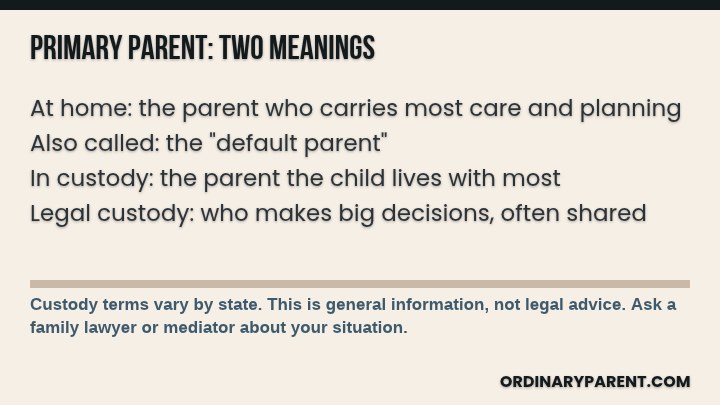
In family law, the term is about living arrangements. The primary parent, often called the custodial or primary residential parent, is the one the child lives with most of the time. The other parent usually has parenting time or visitation. Cornell Law School’s Legal Information Institute gives a short definition of the custodial parent.
Courts often split custody into two parts. Physical custody is about where the child lives. Legal custody is about who makes major decisions, like schooling and medical care. Parents can share legal custody while one parent has primary physical custody.
The exact terms change from state to state, and some states avoid the word “custody” altogether. For U.S. taxes, the IRS generally treats the custodial parent as the one the child lived with for more nights during the year. This is general information, not legal advice. A family lawyer or mediator in your area can explain how your state uses these words.
Primary Parent in Joint Custody
Joint custody doesn’t always mean a 50/50 schedule. Many joint custody plans still name one parent as the primary residential parent. That parent’s address may decide the school district, and that home is where the child spends most school nights.
Being named the primary parent doesn’t cut the other parent out. In shared legal custody, both parents usually still have a say in big decisions. The American Academy of Pediatrics notes that kids tend to cope better when parents keep conflict away from them and stay involved.
How to Share the Load at Home
If one of you is worn thin, start by making the hidden work visible. Sit down together and write out everything that keeps the house running. Include the small things, like refilling prescriptions, buying birthday gifts and tracking school emails.
Then hand over whole jobs, not single tasks. “Can you buy diapers?” still leaves one parent in charge of noticing. “You own diapers and wipes from now on” moves the thinking too. The parent taking over gets to do it their way, even if it looks different.
Check in every few weeks. Needs change when a new baby arrives or a job shifts. A short talk on Sunday night is easier than one big argument after months of quiet resentment. For more small ideas, see our post on keeping parenting life a little less stressful.
If you’re the primary parent and you feel exhausted all the time, tell your doctor. Burnout and low mood are common in parents, and you deserve support too.
Primary Parent FAQ
Is the primary parent the same as the default parent?
At home, yes, people use the two terms in the same way. Both describe the parent who handles most of the care and planning. “Default parent” is the casual version.
Does the primary parent get more rights in custody?
Not automatically. The primary residential parent usually has the child for more nights, but legal custody can still be shared. The details depend on your state and your court order.
Can the primary parent role change?
Yes. At home it shifts with jobs, new babies and simple choices about who does what. In custody, a court can change a parenting plan if circumstances change.
Is it bad if my child prefers one parent?
Usually not. Preferring one parent is a common phase in babies and toddlers. Steady one-on-one time with the other parent tends to even it out.
Whatever label your family uses, the goal is the same: kids who feel cared for and parents who don’t feel alone in it. If your toddler saves the big feelings for you, read why toddlers hit and laugh next.

Ordinary Parent is a parenting blog dedicated to sharing practical advice, real-life experiences, and helpful tips for modern moms and dads. The goal of this platform is to make everyday parenting easier by providing simple solutions, organization strategies, and honest insights into family life.