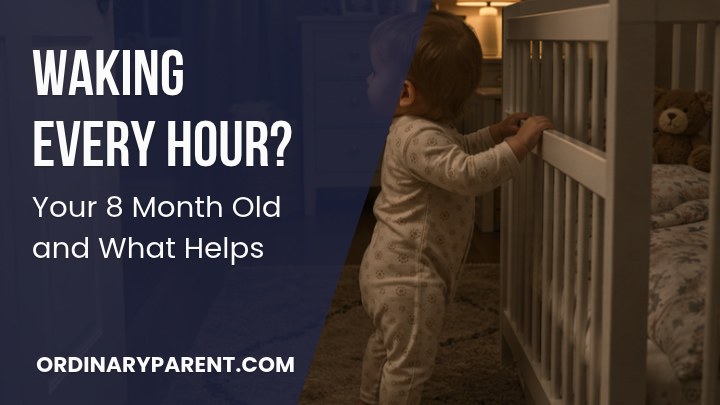
It’s 11:40 p.m. and the monitor lights up again. You got your baby down at seven. They woke at nine, then ten, then just now. If your 8 month old is waking up every hour after months of decent stretches, you’re not imagining it. You’re also far from the only parent staring at the ceiling tonight.
This age brings a cluster of changes that hit sleep hard. Most of them are good news for your baby’s development and bad news for your nights. Below, you’ll find what usually drives the hourly wake-ups, how to respond without building habits you’ll regret, and the signs that mean you should call your pediatrician.
Why Your 8 Month Old Is Waking Up Every Hour
At eight months, your baby’s brain is busy. They’re starting to understand that you still exist when you leave the room. They may be learning to crawl, sit on their own or pull up on the crib rails. Teeth may be on the way, and naps are shifting too.
Any one of these can break up sleep. Together, they explain why so many families hit a rough patch somewhere between eight and ten months. The Sleep Foundation lists teething, separation anxiety, overstimulation and new physical skills as common causes. It also notes that a single cause is often hard to pin down.
Sleep cycles matter here as well. Babies surface briefly between cycles all night long. A baby who fell asleep being fed or rocked often can’t settle again alone when they surface. So a brief stir turns into a full wake-up. If the wakings come roughly every 45 to 60 minutes early in the night, this is likely part of the puzzle.
Is This the 8 Month Sleep Regression?
“8 month sleep regression” is the name most parents find when they search at 2 a.m. It isn’t a medical diagnosis. It’s a handy label for a stretch of worse sleep that lines up with a big developmental leap. Some babies sail through it. Others have two or three rough weeks, sometimes longer.
The useful part of the label is what it tells you: an 8 month old waking up every hour is usually going through something temporary. The Sleep Foundation describes regressions as normally short-lived. Your baby hasn’t forgotten how to sleep. They’re working through something new, and the habits you build in these weeks shape what comes after.
For context, experts recommend 12 to 16 hours of total sleep per day for babies this age, naps included. Plenty of 8 month olds still wake at night now and then. The goal isn’t zero wake-ups. It’s getting back to longer stretches that let you both rest.
Separation Anxiety at Night
This is often the biggest driver. Around this age, babies learn that people and objects keep existing even when they can’t see them. That’s a huge mental step. It also means your baby now knows you’re somewhere else when they wake alone in the dark.
The American Academy of Pediatrics explains that separation anxiety can disrupt sleep from the second half of the first year. A baby may wake several times and cry for one or both parents. According to the AAP’s guide to social and emotional development at this age, it usually peaks between 10 and 18 months.
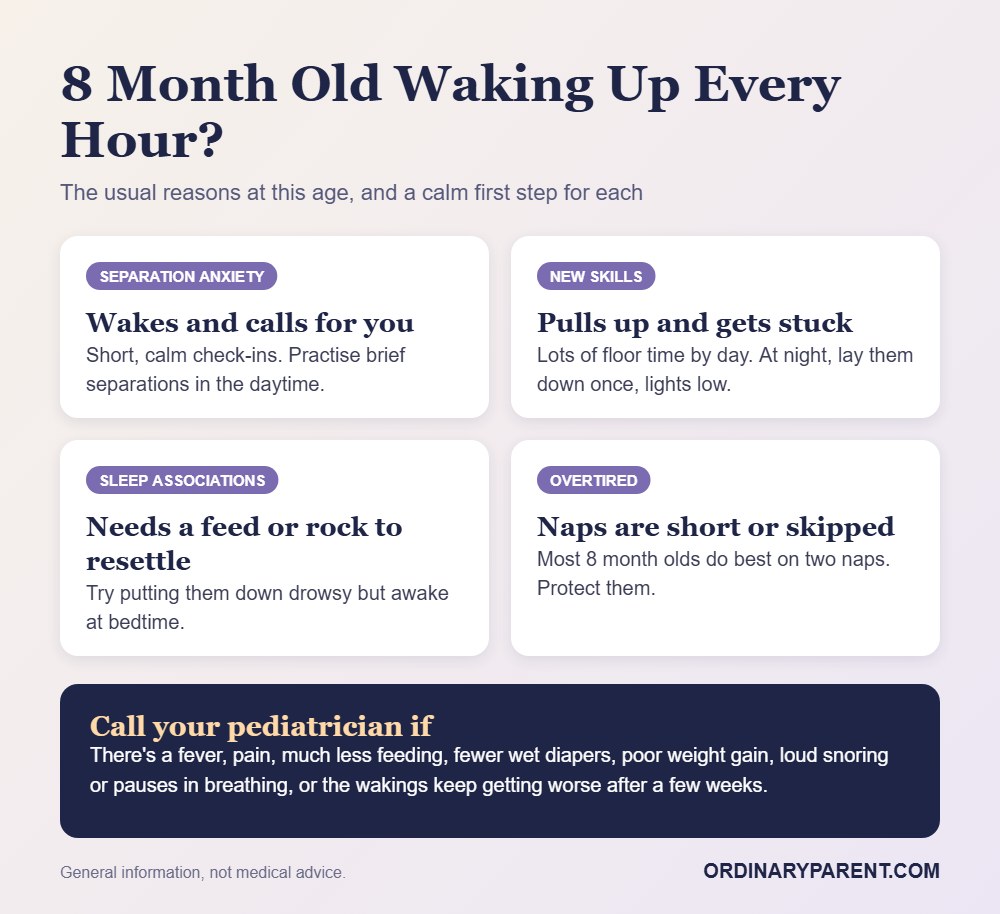
You’ll often spot it by how the crying changes when you walk in. Your baby calms the moment they see you, then screams again as you head for the door. Short, calm check-ins tend to work better than long rescues. Brief separations during the day can help too. Step into the next room while you keep talking, so leaving becomes familiar.
New Skills That Show Up in the Crib
Crawling, sitting and pulling up are thrilling, and your baby may want to rehearse them at midnight. A baby who has just learned to pull to standing can get stuck there. They’re upset because they don’t yet know how to get back down.
The fix is mostly daytime practice. Give your baby lots of floor time. If they pull up in the crib, help them practise bending their knees and lowering themselves during the day. At night, lay them back down once, calmly, with the lights low. You can’t stop the skill from showing up in the crib, but you can keep it from becoming a game.
Teething can add to it. More drool, gnawing on everything and extra fussiness by day suggest sore gums may be part of the story. Ask your pediatrician before you give any pain relief.
What to Do When Your 8 Month Old Keeps Waking Up Every Hour
Start with the hour before bed. A short, predictable routine helps your baby’s body expect sleep: wash, pajamas, feed, book, song, crib. Keep it about the same every night. Keep the room dark, cool and quiet, and use white noise if household sounds carry.
Next, look at how your baby falls asleep at bedtime. If you can put them down drowsy but awake, even some of the time, they get practice settling themselves. That skill is what carries them through the brief wake-ups between cycles.
When they wake, pause for a moment before you go in. Some babies fuss briefly and drift back off. If the crying builds, go in, keep your voice low and your touch brief. Skip the pick-up if a pat and a few words will do. The Sleep Foundation suggests you avoid lifting a baby out of the crib when separation anxiety is behind the tears.
Daytime sleep counts as well. Most 8 month olds do best on two naps, and an overtired baby often sleeps worse at night, not better. If naps only happen on you right now, our guide to contact naps by age explains what’s normal and how to ease out of them.
Whatever response you choose, use it the same way for a week or two before you judge it. An 8 month old waking up every hour often settles faster once your reaction is predictable.
What About Night Feeds at 8 Months?
Some hourly wakings are hunger, especially after a growth spurt or a busy day with little milk. Many babies this age still take a feed at night, and that’s normal. Trouble starts when every wake-up ends with a feed. The feed becomes the only way your baby knows how to fall back asleep.
If you suspect this, offer full feeds during the day and a full feed before bed. A dream feed before you go to bed yourself helps some families, though it doesn’t suit every baby. Our post on when babies stop night feeds covers the signs of readiness and a gentle way to cut back. Check with your pediatrician before you drop feeds, especially if weight gain has been a concern.
When an 8 Month Old Waking Up Every Hour Needs a Doctor
Most rough patches at this age are developmental. Still, hourly waking can sometimes point to something physical. Call your pediatrician if your baby has a fever, seems to be in pain or is feeding much less than usual. Also call if you notice fewer wet diapers, poor weight gain, loud snoring, or pauses or labored breathing during sleep.
It’s worth a call, too, if the wakings keep getting worse after a few weeks or your baby seems unwell during the day. And if you’re so short on sleep that you feel unsafe caring for your baby, say so. Your pediatrician can help, and asking is part of looking after your family.
Whatever you do at night, keep the safe sleep basics in place. Put your baby on their back on a firm, flat surface, with no pillows, bumpers or loose blankets in the crib.
Common Questions About 8 Month Old Sleep
How long does the 8 month sleep regression last?
For many babies, the worst of it lasts a few weeks. It can drag on if new habits form during that time, like feeding or rocking back to sleep after every waking. A calm, consistent response usually shortens it.
Why is my 8 month old waking up every 2 hours?
The usual causes are the same as hourly waking: separation anxiety, new skills, teething, overtiredness or needing help to resettle. Two-hour wakings often line up with the end of a sleep cycle. Working on independent settling at bedtime tends to help.
Should I let my 8 month old cry it out?
Some families use a sleep training method at this age and others don’t. Both are valid choices. If you try one, rule out illness first, pick a method you can stick with, and ask your pediatrician if you’re unsure.
Can I bring my baby into my bed to stop the waking?
The AAP advises against bed-sharing and recommends a separate firm, flat sleep surface for your baby. If you bring your baby in to feed or comfort them, put them back in their crib before you doze off.
These weeks feel endless while you’re in them, but they rarely last as long as you fear. Keep your night responses calm and a little boring, and give any change a week or two to work. If your little one is past the first birthday and still wakes in tears, read our post on why toddlers wake up crying. And for the bigger picture on night feeds, start with our complete guide to dream feeding.

Ordinary Parent is a parenting blog dedicated to sharing practical advice, real-life experiences, and helpful tips for modern moms and dads. The goal of this platform is to make everyday parenting easier by providing simple solutions, organization strategies, and honest insights into family life.