
It’s the middle of the night and a sudden wail cuts through the baby monitor. You stumble down the hall and find your toddler sitting up, sobbing, maybe reaching for you, maybe pushing you away. A few minutes later it’s quiet again, and you’re lying awake wondering what just happened. Why does my toddler wake up crying like this? It can feel random. Usually it isn’t.
Most night crying in toddlers comes down to a handful of causes. Night terrors, an overtired body, a sore ear or new molars, and big feelings that surface at bedtime account for most of it. Each one calls for a different response, so it helps to work out which one you’re dealing with.
Is it a nightmare or a night terror?
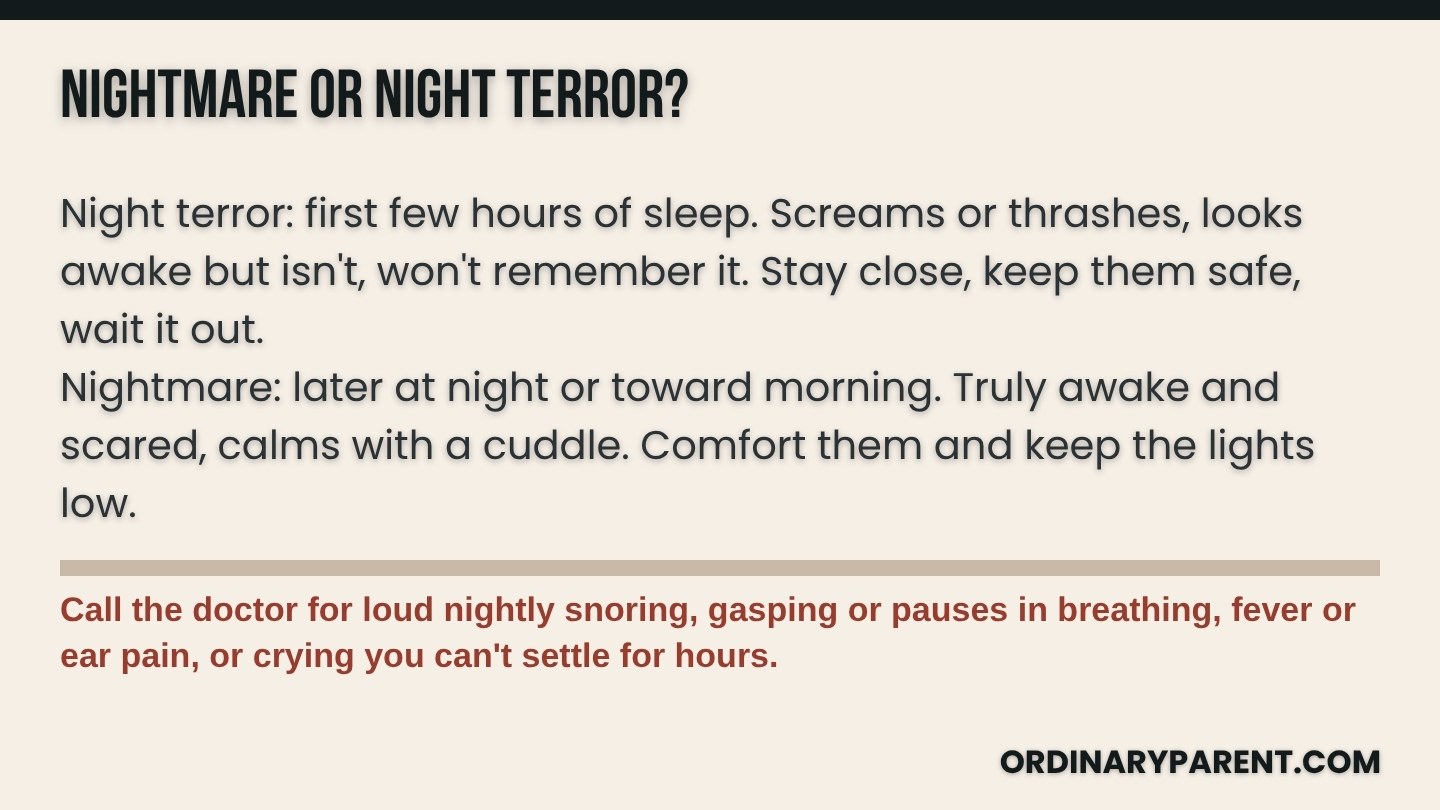
This is the first question to ask, and timing gives you a big clue. Night terrors usually happen in the first few hours after your child falls asleep, during deep sleep. Nightmares tend to happen later in the night or toward early morning, during dream sleep.
A toddler having a night terror may scream, thrash or sit up with their eyes open. They look awake, but they aren’t. They may not recognize you, and trying to hold them can make it worse. The episode usually passes within minutes, and in the morning your child won’t remember a thing.
A nightmare looks different. Your toddler is truly awake, scared and wants you. They calm down when you cuddle them. Some can even tell you a bit about the “bad dream.” The American Academy of Pediatrics has a helpful comparison of the two on HealthyChildren.org.
For a night terror, stay close, keep your child safe and wait it out quietly. For a nightmare, comfort them, keep the lights low and help them settle back to sleep.
Why an overtired toddler can wake up crying
You’d think a tired toddler would sleep more deeply, but often the opposite happens. When toddlers go to bed exhausted, their sleep tends to be more broken, and night terrors become more likely.
The AAP recommends 11 to 14 hours of sleep a day for children aged one to two, naps included. Children aged three to five need 10 to 13 hours. Has your toddler recently dropped a nap, started daycare or had a run of late nights? A short-term sleep debt may explain the crying.
An earlier bedtime for a week or two can help a lot. Even 20 or 30 minutes makes a difference. Our post on what time kids should go to bed has a simple age-by-age guide.
Can pain make a toddler wake up crying?
Sometimes the reason is physical. Toddlers cut their two-year molars between about 18 months and three years. Those teeth can ache more at night. Ear infections also hurt more when a child lies flat. A toddler who wakes crying and tugs at an ear may need a checkup.
Other clues point to discomfort too. A stuffy nose, a fever, a wet diaper or a sudden growth in appetite can all wake a toddler. Is the crying new, and does your child seem unwell in other ways? Then treat it as a possible illness first and a sleep problem second.
Ask your pediatrician before giving any pain reliever, and follow the dosing for your child’s weight.
Separation anxiety and big daytime changes
Toddlers are working hard to make sense of the world. A new sibling, a move, a new caregiver or starting preschool can all show up as night waking. Your child may wake up crying simply because they’ve noticed you aren’t there and want to check you’re still around.
In these cases, a calm, predictable response helps most. Go in, reassure them briefly, and keep your words and actions the same each time. You might say, “I’m here. It’s sleep time. I love you,” and leave once they’re settled. Spending a little extra one-on-one time with your toddler during the day can also ease the nighttime worry. If those big feelings spill into the day as swats and giggles, read our guide on why toddlers hit and laugh.
Habit: why your toddler may wake up crying
Every child wakes briefly several times a night. That’s normal sleep. The difference is whether they can drift back off on their own. Some toddlers always fall asleep while being rocked, fed or held. When they surface at night and find those things gone, they cry.
This isn’t bad behavior. It’s just how they’ve learned to fall asleep. Try slowly changing the way bedtime ends so your toddler falls asleep in their own bed. Over a few weeks, night crying often drops. Have a younger child too? Our guide on why a baby wakes up every hour covers the same idea at an earlier age.
When to call the doctor
Talk to your pediatrician if your toddler snores loudly most nights or sleeps with their mouth open. Gasping or pauses in breathing during sleep also need a check. These can be signs of sleep apnea, which can cause night waking and daytime crankiness.
Call, too, if night terrors happen very often or last longer than about 30 minutes. The same goes for a child who seems confused or unwell during the day. A fever, ear pain, or crying that you can’t settle for hours deserves a check too. And if you’re simply worn out and worried, that’s a good enough reason to ask.
Toddler night crying FAQ
Should I wake my toddler during a night terror?
No. Waking a child mid-terror usually makes them more upset and confused. Stay nearby, keep them safe from bumps, and let the episode pass.
Is it normal for a two-year-old to wake up crying every night?
It’s common for a phase, especially during teething or big changes. If it lasts more than a few weeks or gets worse, look at bedtime, naps and possible illness. Mention it at your next checkup.
Do toddlers grow out of night terrors?
Most do. Night terrors tend to fade as children get older and their sleep cycles mature. Keeping a regular schedule and avoiding overtiredness can make them less frequent.
Can screens before bed cause crying at night?
They can play a part. Screens close to bedtime can make it harder to fall asleep. Scary or exciting shows can also feed into bad dreams. A calm, screen-free hour before bed is a simple thing to try.
The next time your toddler wakes up crying, notice what time it starts and how they react to you. Those two details will tell you a lot. Are naps part of the puzzle? Our guide on moving from contact naps to crib naps is a good place to go next.

Ordinary Parent is a parenting blog dedicated to sharing practical advice, real-life experiences, and helpful tips for modern moms and dads. The goal of this platform is to make everyday parenting easier by providing simple solutions, organization strategies, and honest insights into family life.