
You tuck your toddler in, turn off the light and sit down on the couch. Two minutes later, you hear the soft thud of little feet, and there they are in the doorway, grinning. By the fifth trip, the grin is gone, and so is your patience. Learning how to keep a toddler in bed is one of those parenting jobs nobody warns you about.
Most toddlers respond well to a calm, boring and very consistent plan. It usually takes a week or two. It works best when you understand why your child keeps getting up in the first place. The same calm, boring approach helps with daytime struggles too, like a toddler who hits you and laughs.
Why it’s hard to keep a toddler in bed
Once a toddler moves out of a crib, they discover something exciting. They can leave. For a curious two-year-old, that freedom is hard to resist. Getting up is also a reliable way to get more time with you, which is what many toddlers want most at bedtime.
Other reasons are more practical. Some toddlers aren’t tired yet because bedtime is too early or a late nap pushed it back. Others are scared of the dark, need the bathroom or feel uneasy in a new room. If your child suddenly starts getting up after months of staying put, look for a recent change, like a new sibling or a move.
Check whether the timing is right
Sometimes the real issue is that a child moved to a big-kid bed a little early. Many children are ready somewhere between ages two and three and a half. Common signs include climbing out of the crib or simply being too tall for it. Cleveland Clinic has a helpful overview of when to make the switch.
If your toddler is still under two and isn’t climbing out, it may be worth keeping the crib a while longer. A toddler bed doesn’t have to come with a new sibling’s arrival or a set birthday.
How to keep a toddler in bed with a steady routine
A predictable bedtime routine helps your child’s body know sleep is coming. Keep it short, around 20 to 30 minutes, and do it in the same order every night. A bath, pajamas, teeth, two books and a cuddle is plenty.
Build the usual requests into the routine before the light goes off. Offer a last drink of water and a final bathroom trip. Let them choose one stuffed animal. When your toddler asks for these things later, you can calmly say they’ve already had them.
Check the bedtime itself, too. Our guide on what time kids should go to bed can help you see if your child’s bedtime matches how much sleep they need.
The silent return method
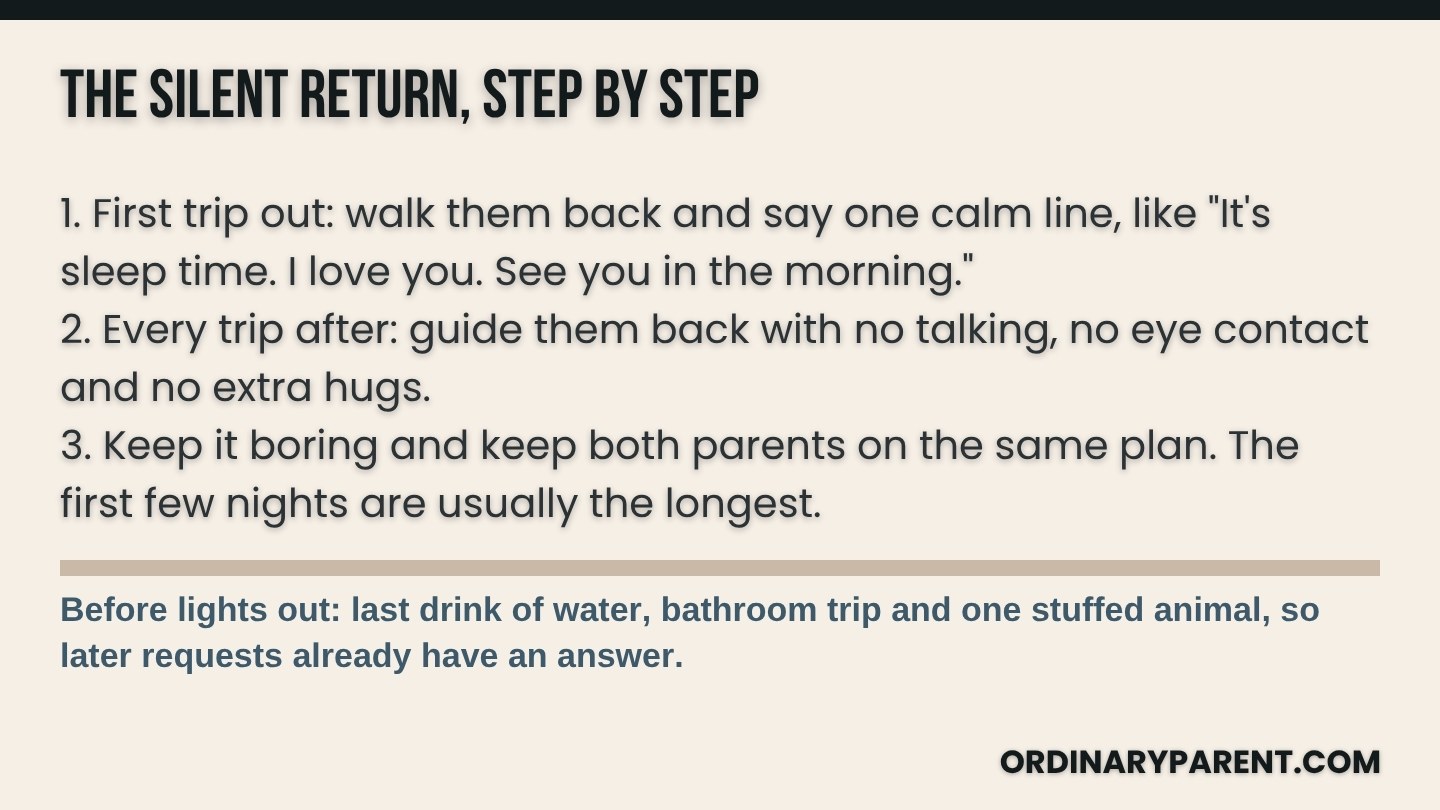
This is the heart of the plan. Each time your toddler gets out of bed, walk them back calmly. The first time, you might say, “It’s sleep time. I love you. See you in the morning.” After that, say nothing at all. No eye contact, no lectures, no extra hugs. Just guide them back and leave.
It’s boring on purpose. If getting up earns a chat, a snack or a funny chase, your toddler will keep doing it. If it earns nothing interesting, they’ll eventually decide it isn’t worth the effort. Expect the first few nights to be long. Many parents walk their child back dozens of times before things get better.
Stay consistent between parents, too. If one person gives in on night three, your toddler learns that persistence pays off.
Small tools that help keep a toddler in bed
A toddler clock that changes color when it’s okay to get up can help children who wake early. They can’t tell time yet. They can understand “stay in bed until the light turns green,” though. A dim night light can ease fear of the dark without making the room too bright.
Some families use a bedtime pass. Your child gets one card each night that they can trade for one quick request, like another hug. Once the pass is used, it’s gone until tomorrow. Praise in the morning also goes a long way. A simple sticker chart works for many toddlers.
Keep the bedroom safe for night wandering
Even with a great plan, some toddlers will get up. Make sure their room is safe if they do. Anchor dressers and bookshelves to the wall, cover outlets and keep cords from blinds out of reach. A baby gate at the bedroom door can keep a sleepy toddler away from stairs.
Take a slow look around the room at toddler height. Anything they could climb, open or pull down is worth moving or securing.
How to keep a toddler in bed: FAQ
How long does it take for a toddler to stay in bed?
Many families see a real change within one to two weeks of consistent returns. Progress isn’t always steady, and a sick day or trip can set things back a little. Stick with the same response and it usually settles again.
Should I lock my toddler’s bedroom door?
Locking the door can be unsafe, especially in an emergency, and it can make some toddlers more scared. A safety gate at the doorway is a better option if you need a barrier.
What if my toddler cries when I walk them back?
Some crying is normal while your child adjusts. Stay calm and keep the routine the same. If the crying seems like real fear, a little more comfort and a night light may help.
Is it okay to lie down with my toddler until they fall asleep?
It’s fine if it works for your family. Just know that your toddler may expect you there when they wake at night. If you want them to fall asleep alone, you can slowly move your chair farther away over a couple of weeks.
Pick one bedtime routine tonight and keep it the same for the next two weeks. That’s often all it takes to keep a toddler in bed. If night crying is part of the picture too, read our guide on why toddlers wake up crying next.

Ordinary Parent is a parenting blog dedicated to sharing practical advice, real-life experiences, and helpful tips for modern moms and dads. The goal of this platform is to make everyday parenting easier by providing simple solutions, organization strategies, and honest insights into family life.