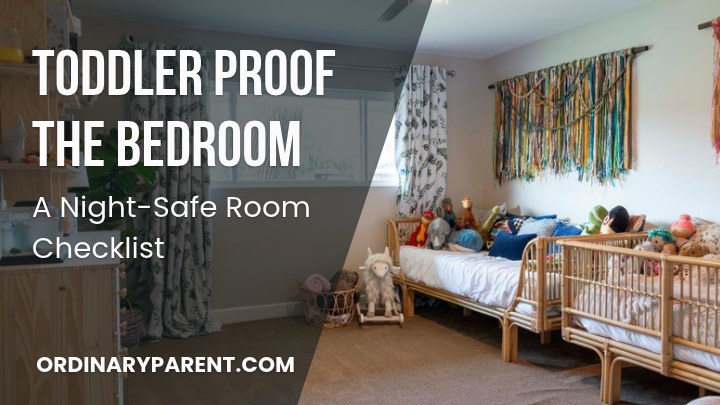
It’s 5:40 a.m. and the house is quiet. Then you hear it: a drawer sliding open, a thump, small feet padding across the floor. Your toddler is up, and they’re exploring their room without you. That’s the moment most parents decide to toddler proof a bedroom properly. A child’s room is the one place they spend hours alone, often in the dark. It deserves more care than any other room.
Most childproofing checklists treat the bedroom like the kitchen. This one doesn’t. It’s built around what toddlers do at night and early in the morning, when nobody’s watching. Work through it once, then do a quick check every few months as your child grows taller and braver.
Toddler proof a bedroom from your child’s height
Before you buy anything, get down to your toddler’s eye level and crawl around the room. It sounds silly, but you’ll spot things you never see from standing height. Look for cords trailing behind the dresser, a loose outlet cover and a lamp you can pull by its wire. Notice the bottom drawer that makes a perfect step.
Then stand on tiptoe and reach as high as you can. That’s roughly how high a determined two-year-old can climb on a chair or a pulled-out drawer. Anything within that zone is fair game. Keep a notepad handy and write down everything you find. You’ll fix most of it with a screwdriver and an afternoon.
Anchor every piece of furniture
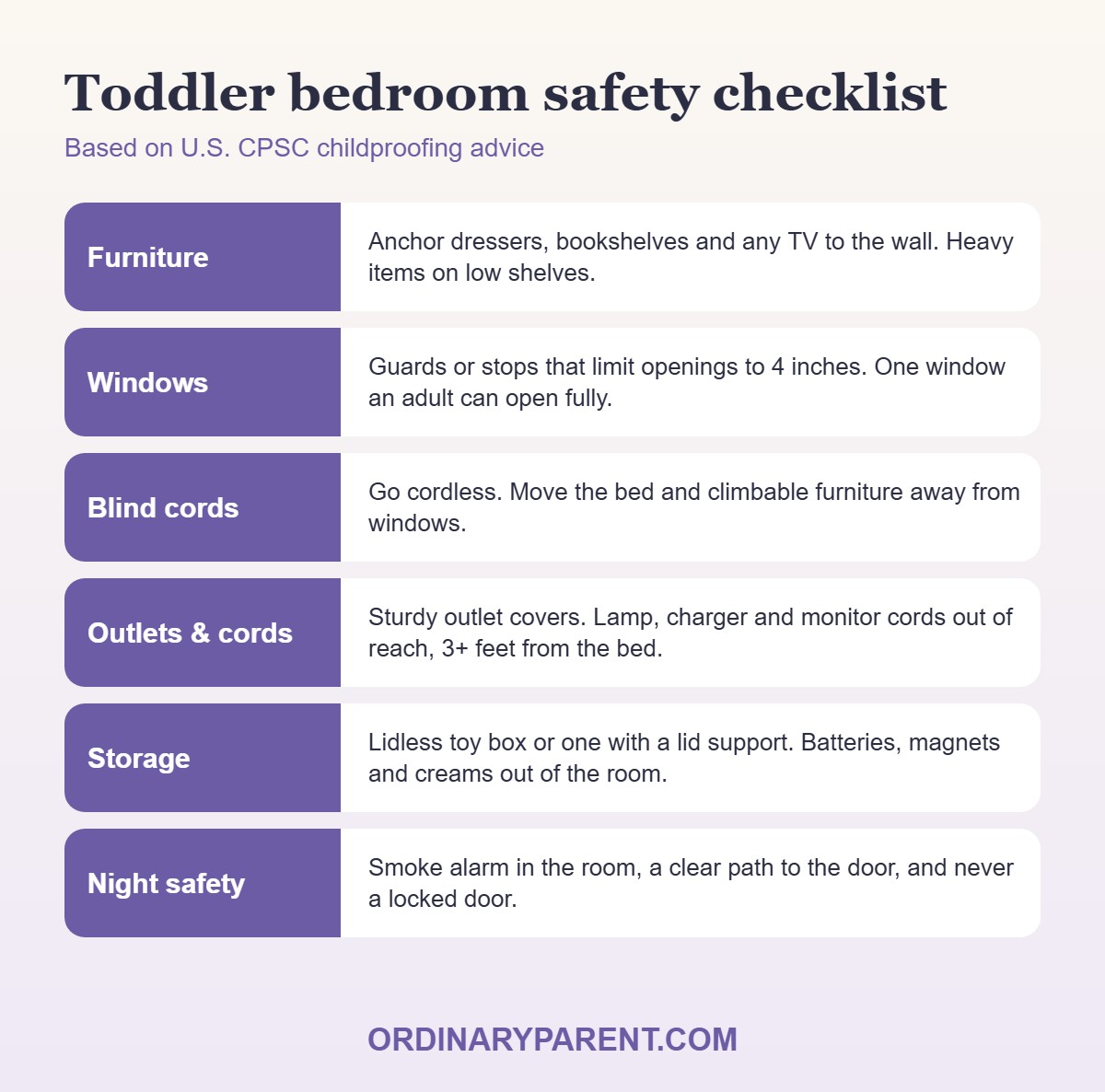
If you only do one thing, do this. Dressers, bookshelves and TVs can tip when a child pulls on them or climbs open drawers like a ladder. The U.S. Consumer Product Safety Commission says nearly 80% of furniture, TV and appliance tip-over deaths involve children 5 and younger. Its childproofing guide recommends anchoring furniture and TVs to the wall.
Anti-tip kits are cheap and usually come with new furniture. Screw the strap into a wall stud, not just drywall, and check it’s tight every few months. A TV doesn’t really belong in a toddler’s room. If one is there, put it on a low, sturdy base and push it as far back as it goes. Heavy items like lamps and baskets of books belong on lower shelves.
Deal with windows and blind cords
Windows are the second big risk in any toddler room. Window screens keep bugs out, but they won’t stop a child from falling through. The CPSC advises window guards or stops that limit openings to four inches or less. Make sure at least one window can still open fully for an adult in a fire.
Blind and curtain cords are a quieter danger. The CPSC says strangulation can happen in less than a minute. It recommends cordless window coverings in every room where young children spend time. If you can’t replace them yet, shorten the pull cords and anchor any looped cords to the wall. Move the bed, crib and climbable furniture away from the window, ideally to another wall.
Toddler proof the bedroom floor and walls
Outlets near the floor are tempting for small fingers. Use covers that children can’t easily pull out and that are too big to choke on. Better still, place furniture in front of outlets you don’t use. Tuck lamp cords and charger cables behind furniture, or run them through a cord cover.
Baby monitors need a special mention. Keep their cords at least three feet from the crib or bed. Mount the camera on the wall rather than balancing it on the crib rail. Check night lights, remotes and toys for button batteries, and make sure the battery compartments are screwed shut. A swallowed button battery is a medical emergency.
Rethink storage and toys
A toy chest with a heavy lid can trap or pinch a child. Choose one with no lid, or with a hinge that holds the lid open in any position. Open bins on low shelves work well, because your toddler can reach their toys without climbing.
Keep the “grown-up” things out of the room altogether. That includes diaper creams, medicines, coins, small magnets, plastic dry-cleaning bags and nail scissors. Diaper-changing supplies are the usual culprit, so give them a closed, high cabinet or move them to another room once your child can stand.
Toddler proof the bedroom for night wandering
This is where a toddler’s room differs from the rest of the house. Your child will wake in the dark, half asleep, and get out of bed. Keep the path from the bed to the door clear of toys and rugs that slide. A dim night light helps them see without waking them fully.
Fit a smoke alarm inside the bedroom, as the CPSC recommends, and test it monthly. Using a door knob cover or a gate? Make sure an adult can open it fast in an emergency. Never lock a child inside their room. If your toddler has just moved into a big bed, a low bed or a mattress close to the floor softens any tumbles. Our guide on how to keep a toddler in bed covers the behaviour side of night wandering.
When to get extra help
If your child climbs everything no matter what you try, ask your pediatrician for ideas at the next check-up. Some children are simply more fearless, and a doctor can help you think about safety and sleep together. Call 911 or your local emergency number straight away if you think your child has swallowed a battery, a magnet or medicine. In the U.S., Poison Control is available at 1-800-222-1222.
Frequently asked questions
When should I toddler proof a bedroom?
Ideally before your child can pull up to standing, usually around 9 to 12 months. Do another round when they move to a toddler bed, because they’ll suddenly have free run of the room.
Is it safe to lock my toddler in their room at night?
No. A locked door can trap a child during a fire or other emergency. A door knob cover or a gate an adult can open quickly is a safer way to keep a wanderer contained.
Do I need to anchor small furniture too?
Yes, if a child could climb it or pull it over. Small bookcases and nightstands can still tip, especially with drawers open. Most come with anchoring hardware, and it only takes a few minutes to fit.
What should a toddler’s room have in it?
Keep it simple: a safe bed, a few anchored storage pieces, cordless blinds, a smoke alarm and a dim night light. Fewer objects mean fewer things to climb and less to distract them at bedtime.
A toddler proof bedroom means calmer mornings
Once you toddler proof a bedroom, those early-morning thumps get a lot less scary. You can listen on the monitor knowing the dresser won’t tip and the cords are out of reach. If your little one is waking upset rather than playful, read our post on why toddlers wake up crying next. And if bedtime itself is the battle, our guide to what time kids should go to bed is a good place to start.

Ordinary Parent is a parenting blog dedicated to sharing practical advice, real-life experiences, and helpful tips for modern moms and dads. The goal of this platform is to make everyday parenting easier by providing simple solutions, organization strategies, and honest insights into family life.