You’ve got the stroller unfolded in the hallway, the sun is out, and your baby is wriggling in your arms. Then you look at that upright seat with its little five-point harness and wonder if they’re actually ready for it. When can a baby sit in a stroller seat like a big kid? And what are you supposed to do until then?
The short version is that your baby can ride in a stroller from day one, as long as they’re lying flat or well supported. Sitting upright in the regular seat comes later, once your baby has the head, neck and trunk control to hold themselves up. Here’s how the stages work, the signs to look for, and the safety rules that matter at every age.
When Can a Baby Sit in a Stroller? The Short Answer
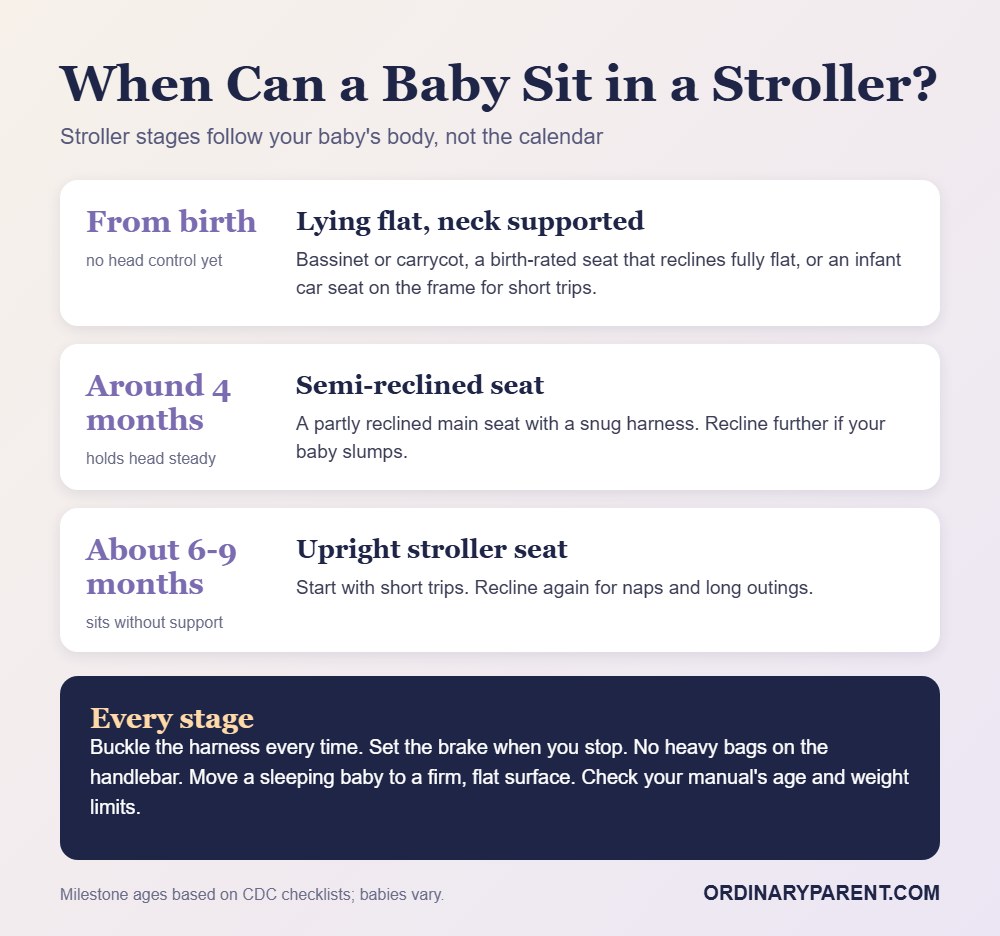
Most babies are ready for an upright stroller seat somewhere around six to nine months. Brand guides tend to quote “about six months,” but that number skips over the milestone that actually matters: sitting without support.
The CDC’s milestone checklists are a useful reality check. By six months, many babies lean on their hands to prop themselves up while sitting. By nine months, most sit without support. So a six-month-old who still slumps sideways isn’t behind. They just aren’t ready for a fully upright seat yet.
Age is a rough guide. Your baby’s body is the real one. Before that point, a stroller is still perfectly usable. You just use it in a different mode.
Stage One: Lying Flat From Birth
Newborns don’t have the muscle strength to hold up their heads. In a stroller, they need to lie flat or nearly flat with their neck fully supported. You have three common options.
A bassinet or carrycot attachment lets your baby lie flat, much like a pram. A stroller seat that reclines fully flat and is rated from birth does the same job. The third option is an infant car seat that clicks onto the stroller frame, often sold as a travel system.
Check the manual for your exact model. It will tell you the minimum age or weight for each mode and whether the seat reclines far enough for a newborn. If the manual says a seat is for babies who can sit up unassisted, a newborn shouldn’t ride in it, even fully reclined.
Stage Two: A Reclined Seat Once Head Control Is Solid
Head control usually arrives first. The CDC lists holding the head steady without support, while you hold your baby, as a four-month milestone. Around this stage, many parents move from the bassinet to the main seat in a partly reclined position.
A semi-reclined seat gives your baby a better view without asking their core to do all the work. Keep the harness snug and watch how they sit. If your baby’s head flops forward or they slide down and slump to one side, recline the seat further and try again in a few weeks.
Some babies also start to resist lying flat around now. They want to see the world. A slight recline is often the happy middle ground.
Signs Your Baby Is Ready to Sit Up in the Stroller
Readiness for the upright position shows up in daily life before it shows up on the sidewalk. These are the signs worth checking:
- Your baby holds their head steady with no wobble, even when you move.
- They sit on the floor without toppling, or with only light hand support.
- They stay upright in a high chair without slumping.
- They seem frustrated or bored lying back and keep trying to pull forward.
- Your stroller manual’s minimum age or weight for the upright seat is met.
If most of these are true, try short trips in the upright position and watch for slumping. Tired babies slouch more, so recline the seat again for longer outings or nap time.
Car Seats on the Stroller: Handy, but Not for Long Naps
Clicking the infant car seat onto the stroller is convenient, especially when your baby falls asleep in the car. It’s a fine way to get from the car into the store. It isn’t the place for long stretches of sleep.
The American Academy of Pediatrics says sitting devices such as car seats, strollers, swings and bouncers aren’t recommended for routine sleep. If your baby falls asleep in one, the AAP advises moving them to a firm, flat surface as soon as you can. You’ll find the full advice in the AAP’s parent’s guide to safe sleep.
In practice, use the car seat on the stroller for errands and short walks. For a long walk where you expect a nap, the flat bassinet or a fully reclined, birth-rated seat is the better choice. If your baby hates the car seat in the first place, our post on why babies hate car rides may help.
Stroller Safety Basics for Every Stage
Whatever mode you use, buckle the harness every time, even for a quick trip down the driveway. Babies can slip down or lean out faster than you’d expect. Set the parking brake whenever you stop, and never leave your baby alone in the stroller.
Don’t hang heavy bags from the handlebar. The extra weight can tip the stroller backward, especially once your baby climbs out. Use the basket under the seat instead, and stay within its weight limit.
Keep little fingers clear when you fold, unfold or adjust the seat, since hinges can pinch. Check that the frame is fully locked open before your baby goes in. If you bought the stroller secondhand, look it up on the CPSC recall list before you use it. Finally, cover the stroller with a light, breathable shade rather than a blanket, which can trap heat.
Common Questions About When a Baby Can Sit in a Stroller
Can a 3 month old sit in a stroller?
A three-month-old can ride in a stroller in bassinet mode, in a fully reclined seat rated from birth, or in an infant car seat on the frame. Most aren’t ready to sit upright yet because their head and trunk control is still developing.
Can a baby sit in a stroller without a car seat?
Yes. From birth, a bassinet or a fully flat, birth-rated seat works without the car seat. Once your baby has good head control, a reclined seat works too, and the upright seat comes after they can sit unsupported.
Can my baby sleep in the stroller?
Short naps on a walk are common, but the AAP doesn’t recommend strollers or car seats for routine sleep. If your baby nods off, move them to a firm, flat sleep surface when you get home.
Is it OK for my baby to face forward in the stroller?
Once your baby sits well, either direction is fine. Many younger babies like facing you, since they can see your face and hear your voice. Forward-facing suits curious older babies who want to watch the world go by.
There’s no prize for moving to the upright seat early. Follow your baby’s body, and enjoy the walks at whatever angle suits them this month. If those walks are part of your nap routine, our guide to contact naps by age covers how daytime sleep changes over the first two years.

Ordinary Parent is a parenting blog dedicated to sharing practical advice, real-life experiences, and helpful tips for modern moms and dads. The goal of this platform is to make everyday parenting easier by providing simple solutions, organization strategies, and honest insights into family life.