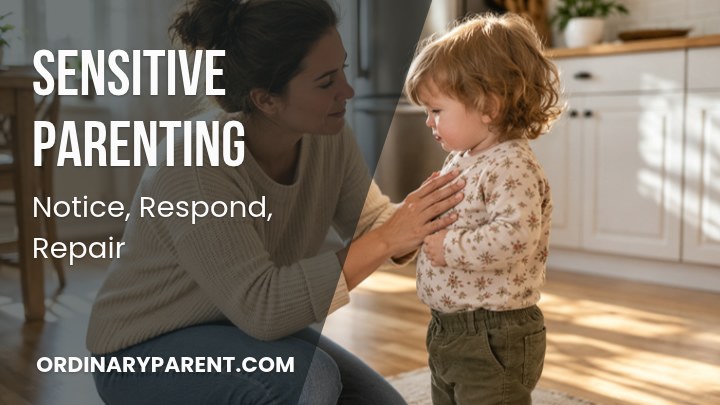
Your toddler is mid-meltdown on the kitchen floor because the banana broke in half. You’re tired, dinner is burning, and the first thing out of your mouth is “Stop it, it’s just a banana.” A minute later you wonder whether there was a better way to handle that. If you want to become a more sensitive parent, that wondering is a good place to start.
Being a sensitive parent doesn’t mean being soft, permissive, or emotional all the time. In child development research, parental sensitivity means noticing your child’s signals, reading them well, and responding to what they need. You can learn it, and you don’t have to get it right every time for it to matter.
What a Sensitive Parent Actually Does
The idea comes from attachment research that began with psychologist Mary Ainsworth in the 1960s and 70s. She watched mothers and babies at home. The most secure babies had parents who picked up on their cues and responded promptly and appropriately. Later studies found the same pattern with fathers. A 2024 piece in The Conversation sums up research linking sensitivity to secure attachment with both parents.
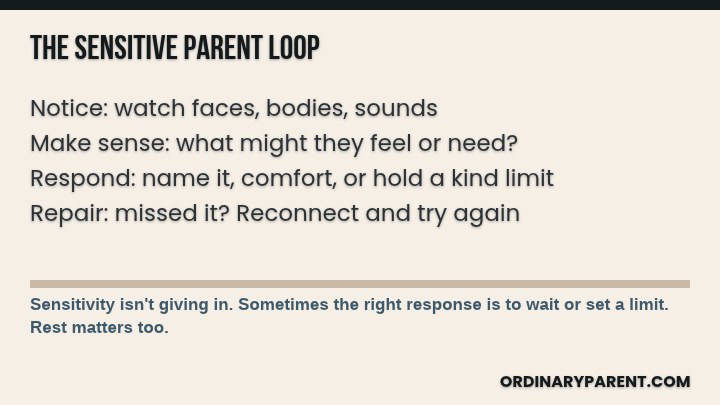
In everyday terms, a sensitive parent does three things in a loop: they notice, they make sense of what they notice, and they respond. For example, a baby fusses and rubs their eyes, you read it as tiredness, and you start the nap routine. A preschooler goes quiet after school, you guess something happened, and you make space for them to talk later.
Note the word “appropriately.” Sensitivity isn’t about rushing in for every whimper or giving children whatever they want. Instead, the sensitive response is sometimes to wait, to set a limit, or to let a child try something hard on their own.
How a Sensitive Parent Slows Down to Notice
You can’t respond to what you don’t see, and busy, distracted days make noticing hard. Most of us miss cues because we’re juggling five things, not because we don’t care.
Try picking one or two short windows each day when you’re fully there. Bath time, the walk to daycare, or ten minutes on the floor before dinner all work. Then put the phone in another room and just watch your child. What makes them light up? What makes them pull back? Babies and toddlers send a lot of signals through their bodies: turning away, arching, going stiff, reaching, babbling louder.
Researchers at Harvard’s Center on the Developing Child call this back-and-forth “serve and return.” Your child serves with a look, a sound, or a point, and you return it with a word, a smile, or a shared look. Over time, those small exchanges add up.
Learn to Read What’s Underneath the Behavior
The second step is interpretation. A lot of difficult behavior in young children is a message they don’t yet have words for. Hitting can mean frustration or a bid for attention. Clinginess at drop-off can mean the morning felt rushed. Bedtime stalling can mean they missed you during the day.
When behavior puzzles you, ask what your child might be feeling or needing. Treat your answer as a guess, not a verdict. You might say, “You look really mad that the tower fell,” and watch how they react. If you’re wrong, they’ll often show you. Our posts on why a toddler hits and laughs and why a toddler hits one parent but not the other walk through this kind of reading for one very common behavior.
Besides that, it helps to know what’s normal for your child’s age. A two-year-old who can’t share isn’t being selfish. They just aren’t developmentally there yet. As a result, it’s easier to respond calmly.
How a Sensitive Parent Responds
Once you have a read on what’s going on, the response can be small. Name the feeling. Offer comfort if they want it. Give a simple choice. Hold a limit kindly: “I won’t let you hit. You can stomp your feet instead.”
A sensitive response is also well-timed. Toddlers in a full meltdown can’t process a lecture, so the talk comes later, after they’ve calmed down. Babies need quicker responses than older kids, who can learn to wait a bit.
Match the size of your response to the moment. A bumped knee might need a quick hug and nothing more. A scary dream might need you to sit with them for a while. Overreacting can be as confusing for a child as ignoring them.
Repair When You Get It Wrong
Every parent misses cues, snaps, or reacts too fast. Research on parent-child interaction suggests that even sensitive parents are out of sync with their babies much of the time. What seems to matter is that they notice and reconnect.
Repair can be simple. “I yelled earlier, and that wasn’t okay. I was frustrated, but it wasn’t your fault. I’m sorry.” After that, move on. Children learn from repair that relationships can survive a rough moment and that big feelings can be fixed. That’s a lesson worth more than a perfect record.
Go easy on yourself here too. Guilt that turns into self-criticism usually makes you less responsive, not more.
A Sensitive Parent Needs Rest Too
It’s hard to read a child’s signals when you’re running on empty. Sleep deprivation, stress, and feeling alone all make parents less patient. That’s not a character flaw. It’s what happens to a tired brain.
Even so, small changes help. Share the load with a partner or family member where you can. Also, lower the bar on things that don’t matter. Notice your own early warning signs, like a tight jaw or a rising voice, and take a breath before you respond. If one of you has become the default primary parent, it may be worth talking about how to spread things out.
If you feel persistently low, anxious, or unable to enjoy your child, talk to your doctor. Postpartum depression and parental burnout are common, treatable, and can make sensitivity much harder. Getting support is one of the most sensitive things you can do for your family.
Common Questions
Is a sensitive parent the same as a highly sensitive person?
No. “Highly sensitive person” describes a temperament trait: someone who feels sensory input and emotion very intensely. Parental sensitivity is a skill set about reading and responding to your child. You can be one without the other.
Will being a sensitive parent spoil my child?
No. Responding to a child’s real needs doesn’t spoil them. Research links sensitive parenting with more secure attachment. Sensitivity includes setting limits when a child needs them.
Can dads be just as sensitive as moms?
Yes. Studies show that sensitivity matters for attachment with fathers too. It’s a skill any caregiver can build with time and attention.
How long does it take to become a more sensitive parent?
There’s no finish line. It’s an ongoing practice that changes as your child grows. Small, steady habits tend to matter more than a big overhaul.
Starting Small
You don’t need a new parenting philosophy to become a more sensitive parent. Pick one quiet window a day, watch your child closely, and make your best guess at what they’re telling you. Of course, some days you’ll miss it. Repair, rest, and try again tomorrow.
With a little one at home, our post on contact naps by age is a good next read on meeting a baby’s need for closeness.

Ordinary Parent is a parenting blog dedicated to sharing practical advice, real-life experiences, and helpful tips for modern moms and dads. The goal of this platform is to make everyday parenting easier by providing simple solutions, organization strategies, and honest insights into family life.