
It’s 10:30 p.m. You’re standing in a dim kitchen with a bottle or a sleepy baby, wondering if the milk for this feed matters. Maybe someone told you formula keeps babies fuller at night. Maybe you’re nursing and wondering if a pumped bottle would be easier. For a dream feed, formula vs breast milk is a fair question. The answer is more practical than you might expect.
The short version: both work. The milk type changes a few practical things: digestion, prep, storage and your milk supply. It doesn’t change whether a dream feed is worth trying. Below is what really differs, so you can set up the feed that fits your family.
Dream feed formula vs breast milk: does the milk type matter?
A dream feed is a gentle feed you give your sleeping baby before your own bedtime. It usually happens between 10 p.m. and midnight. The goal is to top them up so their first long stretch lines up with yours. If you’re new to the idea, our complete guide to dream feeding covers the basics.
The feed works the same way whatever is in the bottle or the breast. What matters most is that your baby takes a good amount calmly and goes back down without fully waking. Use the milk your baby normally drinks. Switching milk just for one night feed rarely helps. A new formula can also upset a sensitive tummy.
So the real questions aren’t about which milk is better. They’re about how each one fits a sleepy feed in the dark.
Does formula keep babies fuller at night?
This is the claim parents hear most. There’s a small grain of truth in it. Breast milk is easier for babies to digest, so breastfed babies tend to eat more often. Formula takes a little longer to digest, and formula-fed babies often go a bit longer between feeds.
That doesn’t mean a formula dream feed will buy you a whole extra night. Sleep stretches depend on age, growth, temperament and habits far more than on the milk. Plenty of breastfed babies sleep long stretches, and plenty of formula-fed babies wake at 2 a.m. anyway.
Please skip the old tricks to make a bottle heavier. Don’t add rice cereal to a bottle unless your pediatrician tells you to for a medical reason. The AAP advises against it because it can add extra calories and raise the risk of choking. Mixing formula with less water than the label says is also unsafe. It can strain your baby’s kidneys and cause dehydration. Always follow the mixing directions exactly.
Dream feeding with breast milk: nursing or a pumped bottle
If you nurse, the dream feed has a real perk. It empties your breasts before your own long stretch of sleep, so you may wake up more comfortable. Sleepy babies often latch well, though some need a gentle nudge. Stroking their cheek or lower lip usually helps them root and start sucking.
Some families let a partner give a pumped bottle at the dream feed. That way the nursing parent can go to bed early. It’s a lovely way to share nights. Keep your supply in mind, though. If your breasts skip a feed regularly, your body may start making less milk. To protect their supply, many nursing parents pump around the time of the dream feed in the early months.
Storage matters for pumped milk too. The CDC’s breast milk storage guidance says freshly pumped milk can sit at room temperature for up to 4 hours. Keep thawed milk in the fridge and use it within 24 hours. If your baby doesn’t finish a bottle, use the leftovers within 2 hours or throw them out.
Dream feeding with formula: prep and timing
Formula’s main challenge at a dream feed is timing. You want a bottle ready the moment you lift your sleepy baby, without leaving it sitting out too long.
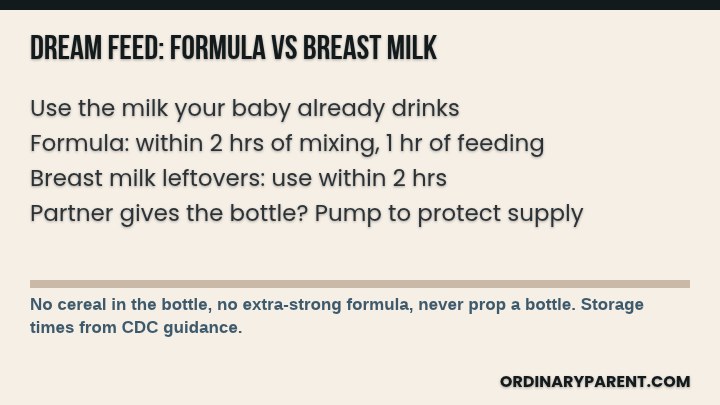
The CDC’s formula guidance gives clear limits. Use prepared formula within 2 hours of making it, and within 1 hour once your baby starts drinking. Not using it within 2 hours? Put it in the fridge right away and use it within 24 hours. Throw out any formula your baby leaves behind.
Many parents make the dream feed bottle a few minutes before they wake the baby. Others keep a ready-made bottle in the fridge and warm it briefly. Both are fine. Ready-to-feed formula is handy for a sleepy feed because there’s no mixing, though it costs more.
Hold your baby fairly upright and keep the bottle at a gentle angle so milk flows slowly. Paced feeding helps sleepy babies avoid gulping air. Never prop a bottle and leave your baby alone with it. And don’t put your baby to bed with a bottle.
Combination feeding: dream feed with formula vs breast milk
If your baby gets both breast milk and formula, you have options. Some parents give formula at the dream feed so the nursing parent can sleep. Others nurse at the dream feed and use formula during the day. Either can work.
Think about two things. First, protect your supply if you want to keep nursing, since a skipped night session can lower it. Second, pick the option that’s easiest at 10:30 p.m. A dream feed only helps if you can keep it up calmly for a few weeks.
Whatever you choose, keep the amount sensible. Our post on how much milk to give at a dream feed explains how to find the right amount by age. After the feed, a quick burp may help, especially with a bottle. Our guide on burping after a dream feed shows how to do it without waking your baby.
When to talk to your pediatrician
Most dream feed questions are about routines, not health. Still, some signs need a professional opinion. Call your pediatrician if your baby often spits up large amounts. The same goes for arching and crying during feeds, or pain after eating.
Check in too if you see a rash, hives, blood in the stool or ongoing vomiting after starting a formula. These can point to an allergy or intolerance. Fewer wet diapers, poor weight gain, or a baby who is too sleepy to feed also need a call. Ask before you change formulas or add anything to a bottle.
Worried about your supply? A lactation consultant can help you plan pumping around the dream feed.
Dream feed formula vs breast milk: FAQ
Can I give formula at the dream feed if I breastfeed during the day?
Yes, many families do this. Just know that skipping a breast session can lower your supply over time. If you want to keep nursing, consider pumping around the time of the dream feed.
Do I need to warm the bottle for a dream feed?
Not always. Babies can drink milk at room temperature or even cool, if that’s what they’re used to. If your baby only takes warm milk, warm the bottle in warm water and test it on your wrist. Never use the microwave, because it can heat unevenly.
Will switching to formula at night help my baby sleep through?
Probably not on its own. Formula digests a bit more slowly, but sleep depends far more on age, development and habits. Talk to your pediatrician before you change your baby’s milk.
Is a dream feed with breast milk less effective?
No. A breast milk dream feed can work just as well. What matters is that your baby feeds well and settles back to sleep easily.
Formula, breast milk or a bit of both: the best dream feed is one you can do calmly and safely, night after night. Still deciding if the feed fits your baby’s stage? Our guide to baby sleep by age is a good next read. Sleep well when you can.

Ordinary Parent is a parenting blog dedicated to sharing practical advice, real-life experiences, and helpful tips for modern moms and dads. The goal of this platform is to make everyday parenting easier by providing simple solutions, organization strategies, and honest insights into family life.