
You tiptoe into the nursery at 10:45 PM, lift your baby out of the crib, and the eyes pop open. Now you’re awake, they’re awake, and the plan for more sleep has backfired. If that’s happened to you, you’re in good company. Learning how to dream feed is mostly about small details: light, timing, how you move, and when to stop fussing over burps and diapers.
A dream feed is a late-evening feed you give while your baby stays drowsy, usually right before you go to bed. This guide walks you through each step, then covers what to do when your baby keeps waking anyway. New to the idea? Read our quick explainer on what a dream feed is first.
Before You Start: Is Your Baby Ready?
Most parents try a dream feed somewhere between 6 weeks and 4 months. By then, many babies sleep one longer stretch at the start of the night, and a well-timed feed can push that stretch later.
In the first weeks, your pediatrician’s advice comes first. Some newborns need to be woken for feeds until they regain their birth weight. The American Academy of Pediatrics says breastfed newborns typically feed 8 to 12 times a day, so a dream feed only moves one of those feeds (HealthyChildren.org, AAP).
Pick a time before you start. Most families land between 10:00 and 11:00 PM. If you want help choosing, our dream feed schedule for newborns has a sample night and timing by age.
How to Dream Feed, Step by Step
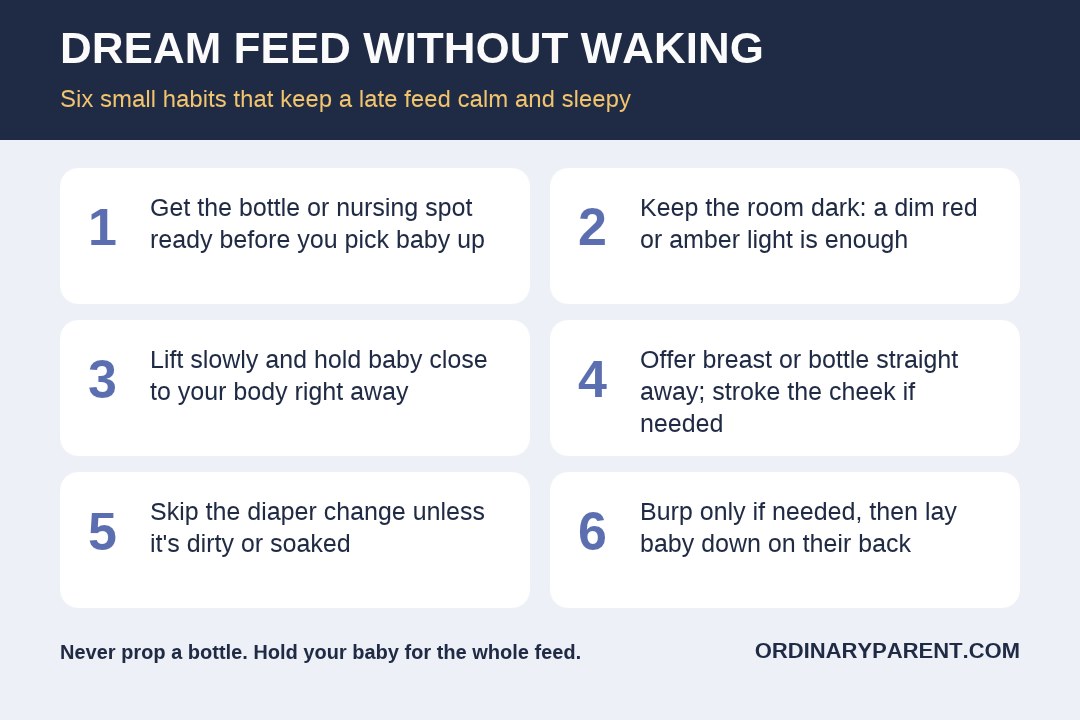
Get everything ready before you touch the baby. Warm the bottle or set up your nursing spot first. Have a burp cloth within reach. Once your baby is in your arms, you want zero hunting for things in the dark.
Keep the room as dark as it was for sleep. A small red or amber night light is enough to see a latch. Skip the overhead light, and keep your phone screen off or turned away.
Lift your baby slowly and hold them close to your body straight away. Sudden air and open space are what usually wake them. Support the head and move as one smooth motion rather than in jerks.
Offer the breast or bottle right away. Drowsy babies often start sucking on their own once they feel the nipple. If they don’t, stroke their cheek or lower lip lightly to trigger the rooting reflex. Give it a minute before you decide it isn’t working.
Let your baby feed until they slow down or let go. Many babies take less at a dream feed than at a daytime feed, and that’s fine. You’re topping them up, not filling a quota. Our dream feed milk guide has rough amounts by age.
When they’re done, burp only if your baby seems uncomfortable, then lay them back down on their back.
How to Dream Feed Without Waking Your Baby
The most common reason a dream feed wakes a baby is too much stimulation, not hunger. Light, noise, handling and temperature changes all add up. The fewer changes your baby notices, the more likely they are to stay drowsy.
Don’t change the diaper unless it’s dirty or soaking. A diaper change is cold, bright and fiddly, so it usually wakes babies fully. Keep talking to a minimum too. A soft “shh” is fine, but chatty cooing tells your baby it’s play time.
Watch for the right level of sleepy. You want a baby who is relaxed and floppy, but not so deeply asleep that they won’t suck at all. If your baby is completely out, wait 15 minutes and try again during a lighter phase of sleep.
If your baby does wake fully, don’t panic. Finish the feed calmly, keep the lights low, and settle them as you would after any night feed. Try again tomorrow, perhaps 20 or 30 minutes earlier.
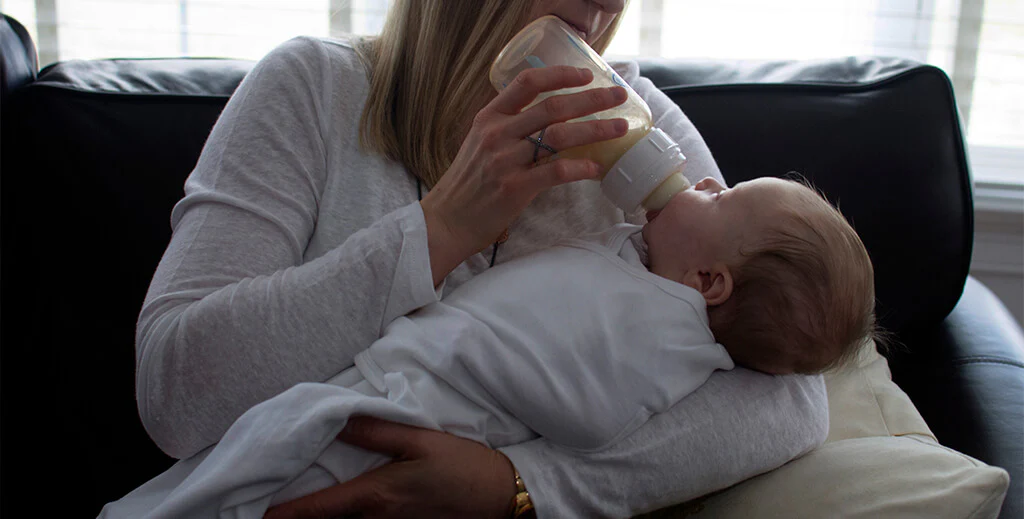
Burping and Putting Your Baby Back Down
Burping is the step that wakes many babies, so you don’t always need to do it. Breastfed babies often swallow less air when they’re sleepy. Bottle-fed babies may need a gentle burp, especially if they squirm or grunt after feeding.
If you do burp, keep your baby upright against your shoulder and rub their back rather than patting hard. Give it a minute or two. If nothing comes up and your baby looks comfortable, you can stop. Our guide on burping a baby after a dream feed goes into more detail.
Lower your baby back into the crib bottom first, then the head. Keep a hand on their chest for a few seconds so the change feels gradual. Then step out quietly.
Common Mistakes When Learning How to Dream Feed
Feeding too early is the big one. If the dream feed happens only an hour after bedtime, your baby may not be hungry enough to eat well. Then they wake at their usual time anyway. Aim for about three hours after bedtime.
Changing the time every night is another. Babies respond to routine, so keep the same time for at least five nights before you judge it.
Some parents give up after one bad night. A growth spurt, a cold or a busy day can throw off any routine. Look at the pattern over a week instead.
And sometimes a dream feed just doesn’t suit a baby. If yours still wakes at the same time, or wakes fully every night, it’s okay to stop. We cover the evidence and the trade-offs in does dream feeding work?

Safe Sleep and When to Call Your Pediatrician
Late feeds are when exhausted parents are most likely to drift off with a baby in their arms. Never prop a bottle and leave your baby to feed alone. If you think you might fall asleep, the AAP advises feeding in an adult bed with pillows and blankets moved away rather than on a sofa or armchair. Afterwards, return your baby to their own crib or bassinet, on their back (AAP safe sleep guide).
Call your pediatrician if your baby seems too sleepy to feed at most feeds, or isn’t gaining weight. Call too if they have fewer wet diapers than usual. Frequent vomiting, choking or coughing during feeds also needs a check. Ask before starting a dream feed if your baby was born early or has reflux or another medical condition.
Dream Feeding FAQ
Should my baby’s eyes be open during a dream feed?
It doesn’t matter much. Some babies flutter their eyes open and closed and still settle straight back. What matters is that they stay calm and drowsy.
What if my baby won’t latch or take the bottle while asleep?
Try stroking their cheek or lip, or wait 10 to 15 minutes for a lighter sleep phase. If they still refuse, put them back down. Some babies simply aren’t hungry at that time.
Can I dream feed with formula?
Yes. The steps are the same for formula, pumped milk and breastfeeding. Prepare and handle formula the usual safe way, and don’t add cereal to the bottle unless your pediatrician tells you to.
When should I stop dream feeding?
Many babies drop it between 4 and 6 months. A sign is when they take very little at the dream feed or sleep just as long without it.
Once you’ve got the steps down, a dream feed takes about 15 minutes and very little thought. Give it a calm week before you decide. When your baby starts taking less, our guide on when to stop dream feeding shows you how to wean it gently.

Ordinary Parent is a parenting blog dedicated to sharing practical advice, real-life experiences, and helpful tips for modern moms and dads. The goal of this platform is to make everyday parenting easier by providing simple solutions, organization strategies, and honest insights into family life.